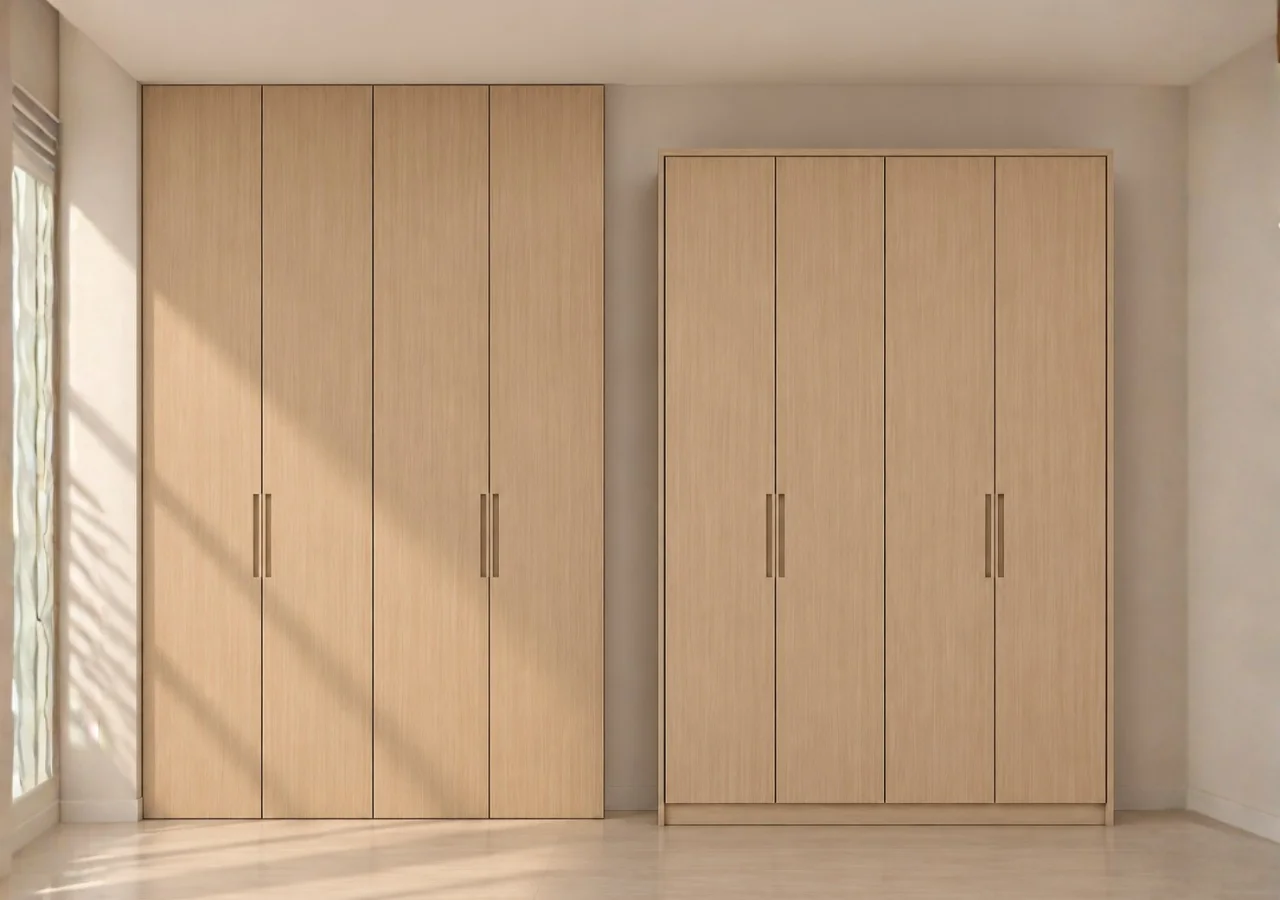
Two Approaches, Different Strengths
A conventional built-in wardrobe is typically measured and constructed to fit a particular wall, niche or ceiling height. A modular wardrobe uses a defined family of cabinet sizes, components or fittings, sometimes adjusted with fillers or custom elements.
Neither approach is automatically better. The right choice depends on the room, the desired appearance, budget, installation constraints and how much flexibility the household wants later.
When Custom Built-ins Make Sense
Irregular walls, sloped ceilings and unusual alcoves may benefit from bespoke carpentry. A skilled designer can tailor every compartment around a client’s clothing and accessories.
However, custom work can also mean longer coordination, more site-specific detailing and replacement parts that must be remade.Ask how drawings are approved, how materials are protected during installation and whether the hardware and finishes are standard products.
When Modular Planning Makes Sense
A modular approach can make it easier to visualise compartment choices and coordinate accessories. Standardised parts may simplify future replacement when the manufacturer continues supporting the range.
But modules do not guarantee perfect fit: unused gaps, ceiling fillers and unusual corners still need design attention. Check whether the selected system offers the depths, heights, door options and structural capacity required.
Compare Total Cost, Not Just Quotation Price
Request itemised quotations with the same scope: carcass, doors, hinges, runners, lighting, installation, delivery, finishing, site protection and warranty. A lower initial quotation may exclude important accessories or finishing details. Also ask what it would cost to repair a damaged door or replace a drawer runner after several years. Total ownership cost is often more informative than the cabinet price alone.
How To Plan For Humid Climates
Malaysia and Singapore experience warm, humid conditions. Material performance depends on substrate grade, edge sealing, adhesives, surface treatment, ventilation and exposure to water.
Plywood can perform well when correctly specified and protected; engineered boards vary widely in moisture resistance. Neither ‘modular’ nor ‘built-in’ tells you whether the wardrobe will tolerate leaks or persistent dampness.
Choosing A Wardrobe For A Condo Or Landed Home
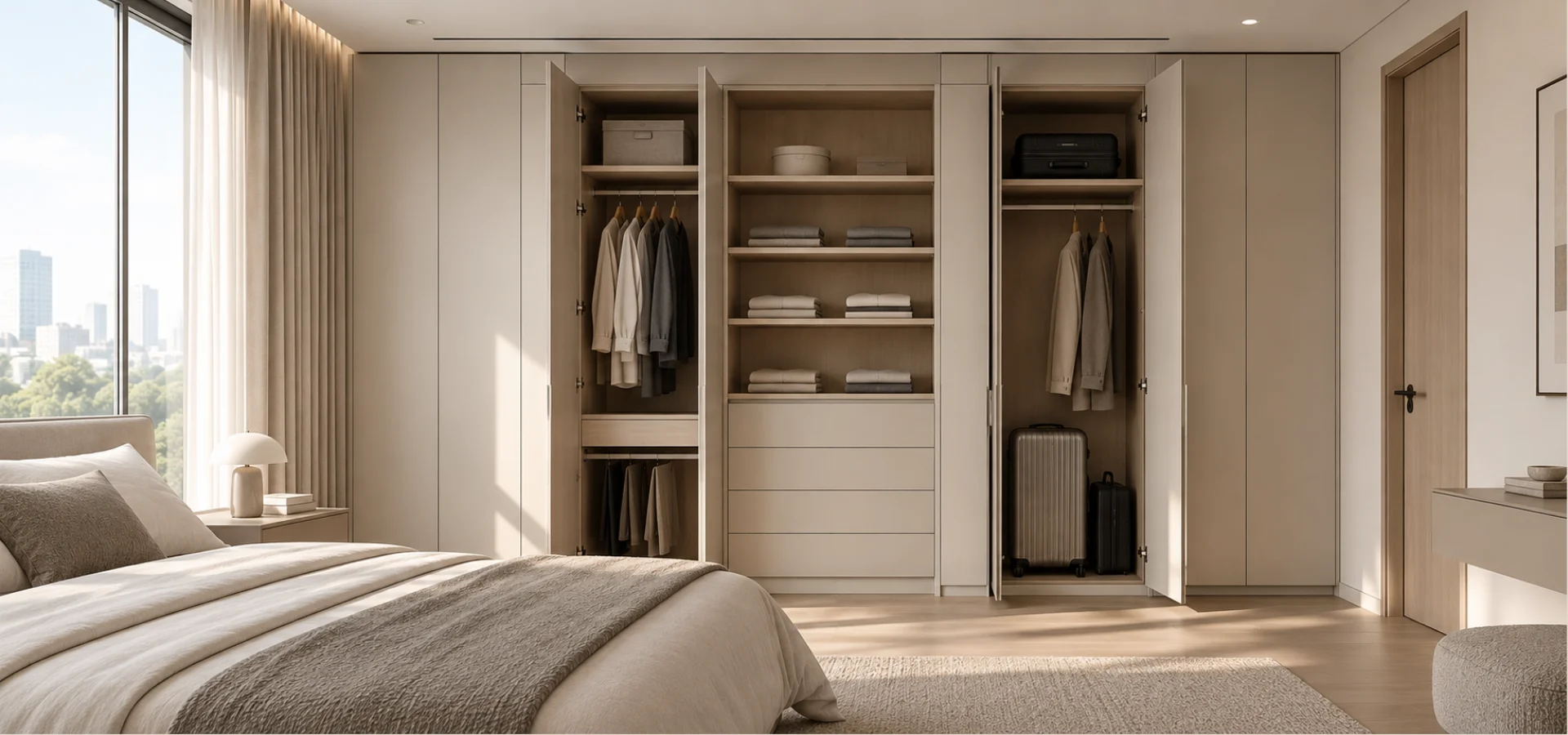
In a condominium, measure lift access, corridor turning space, delivery restrictions and the path into the bedroom. In a landed home, large dimensions may be possible, but access for maintenance and future renovations still matters.
For either type of property, plan a mix of hanging, folded storage, drawers and space for luggage based on real belongings, not showroom styling.